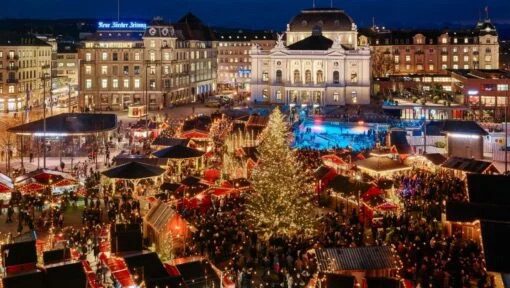
Christmas around the world: in Germany

THE Christmas allemand se veut gourmand, joyeux et magique. Il descend d’une longue tradition de célébrations, au solstice d’hiver, du temps des Germains pour honorer le soleil et la nature. Les festivités chrétiennes, en Allemagne, s’appuient donc sur la tradition germanique.
The tradition
From the beginning of December, Christmas markets open in major cities (Frankfurt, Regensburg, Berlin, Cologne, Dortmund, Leipzig, etc.). During the holiday season, families gather to make Plötzchen (small traditional cakes) to be enjoyed with coffee. An Advent wreath is also made from spruce branches. This holds four candles, each of which will be lit on each Sunday of Advent.
As a family, we also prepare a gingerbread house (hexenhaus) to symbolize the witch's house (Hansel and Gretel story).
Pendant que leurs parents préparent le Réveillon, les petits Allemands couvrent de décorations le sapin et n’oublient pas de prévoir pour le Santa Claus quelques biscuits placés dans une coupelle au pied de l’arbre. Puis ils se hâtent de s’endormir pour se réveiller tôt le lendemain matin où les attendent cadeaux et friandises.
The German table
The New Year's Eve menu always includes—among other delicious dishes—a grilled goose accompanied by apples and red cabbage. For dessert, the famous Christstollen is served, a cake whose origins date back 500 years. Children, on the other hand, love the gingerbread men, which they only eat on this occasion.
Since December 26th is a public holiday, Christmas in Germany can be said to take place over two days. Boxing Day is usually spent visiting friends and family members missed the day before.