
Where does Christmas come from?
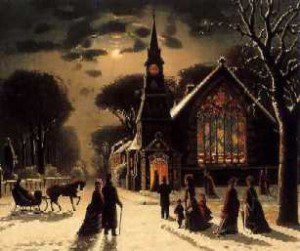
S’il est un congé férié célébré un peu partout autour du monde, il s’agit bien de Christmas. Quelle est son origine? Voyons un peu ce que nous raconte l’Histoire à ce sujet.
Vers l’an 336, au moment du solstice d’hiver, on célébrait la fête du dieu Soleil, à Rome, le 25 décembre. Les chrétiens de la ville considérant cette fête trop païenne prirent la décision de fêter ce jour à leur manière : on dressa une liste des chrétiens martyrs avec la date de leur mort, que l’on considérait comme leur « naissance » céleste, afin de les honorer. En tête de cette liste, on inscrivit le nom de Jesus-Christ. Vers la fin du IVe siècle, cette fête était célébrée dans la majorité des églises chrétiennes mais ce n’était pas encore une occasion de réjouissance mais plutôt un rappel spirituel de la naissance de Jésus.
Origins of the word “Christmas”
Did you know that the word "Christmas" does not appear in any of the Gospels of the Bible? In fact, it only appeared in our language in 1175. The term comes from the Latin expression "dies natalis" which means day of birth and it was used to designate the day on which Christians celebrate the birth of Christ. Over the years, " Natalis » turned into «Nael ", more precisely around 1120. It is interesting to know that in Bethlehem, the Palestinian city where Jesus was born, Christmas is celebrated on three dates: December 24th among the Protestant or Catholic faithful; January 5th among the Greek Orthodox, the Copts and the followers of the Syrian religion; January 6th is Armenian Christmas.
According to almost all the research I have done, the Christmas celebration is pagan and should not be attributed to the birth of Jesus Christ, the Savior of the world. That is my position!!!